
Thursday, November 5
Reflection: There was a time early on in my journey without kids where feeling sorry for myself became my everyday norm.
Now, please hear me when I say this: there is zero shame in the undeniable pain that comes when a life without children becomes your reality. That grief is real, and it deserves to be honored. But for a long time, my sorrow became expected. It became normal for me to wake up feeling low, to compare my life to everyone around me, and to immediately slide into feeling less than. I grew comfortable accepting that this was just how my life was going to be.
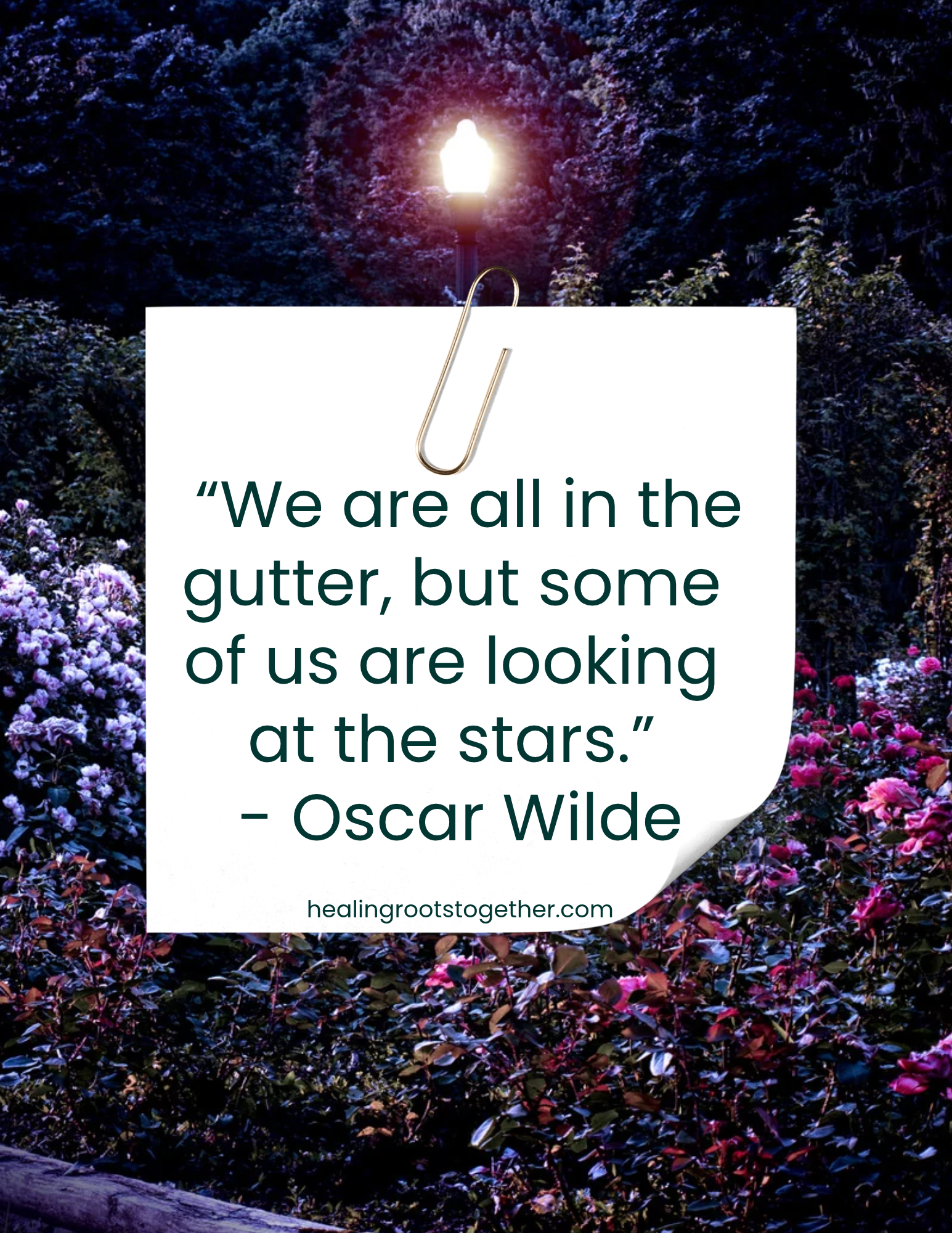
It took time, but eventually, I realized that no one was coming to save me. I had to take that step for myself. I had to teach myself that while the pain was real, so were the moments of joy waiting for me. I had to give myself permission to start looking at the world through a fresh set of eyes. I had to expect that good things would come my way. I had to learn how to receive and trust that I could let go of my strangle hold on life. I had to give myself permission to look up at the stars.
We’ve all spent time down in the gutter, feeling crushed by heavy grief and pretty pissed off that life didn't go the way we planned. It’s completely okay to hang out in the gutter for some time; you kind of have to early on just to survive the shock of it all. But eventually, we have to find our way back up and back out into the world.
Grieving what was lost and living fully can coexist. Choosing to look up at the stars doesn't betray your loss, it honors your capacity to heal and allows you to build a life of genuine abundance and joy. -Adriana Rodriguez-Baptiste
Subscriber Spotlight:
Self Care Tip: When you're ready to take some steps back into the world, trying to jump straight into "thinking positive" can feel performative and exhausting. Instead try micro-gazing. This means turning your eyes upward for 30 seconds once or twice a day. This helps to remind your body that your world extends beyond the immediate weight you're carrying. It’s not about ignoring your grief; it’s a physical cue that gives your nervous system permission to receive space, light, and perspective.

